Managed API usage
Workato measures Managed API usage in API Calls. Each API request fulfilled by a Managed API is measured as an API Call, so a quick response counts as one API Call, and longer-running responses count as more.
The number or type of steps inside a Managed API recipe don't contribute to usage. A Managed API recipe with few steps and one with many consume the same number of API Calls when their response times are equal. This differs from workflow recipes, where each action step contributes to usage.
Some plans measure Managed API usage in Tasks rather than API Calls. Refer to your contract or contact your Customer Success Representative for more information.
How API Calls are measured
The following diagram demonstrates how requests to a Managed API are measured.
Managed API calculation rules
Managed API usage calculations follow the general usage calculation rules, where successful calls count toward usage and failed calls are excluded.
Workato uses the following additional rules to calculate Managed API usage:
- The recipe must execute completely without internal errors.
- The job must finish as designed, even if it returns expected errors such as
4xxor5xxstatus codes defined in the recipe logic. - Cached API responses count toward API Call usage the same way as non-cached responses.
- Synchronous recipe function calls are part of the API Call and don't add extra usage. Asynchronous recipe function calls run as independent workflows measured in Tasks.
- A Managed API recipe with IDP steps or Event streams publishes contributes Pages or Events on top of API Calls.
Managed API usage examples
The following examples demonstrate how Workato calculates usage for API Calls in different scenarios.
Managed API: API recipe
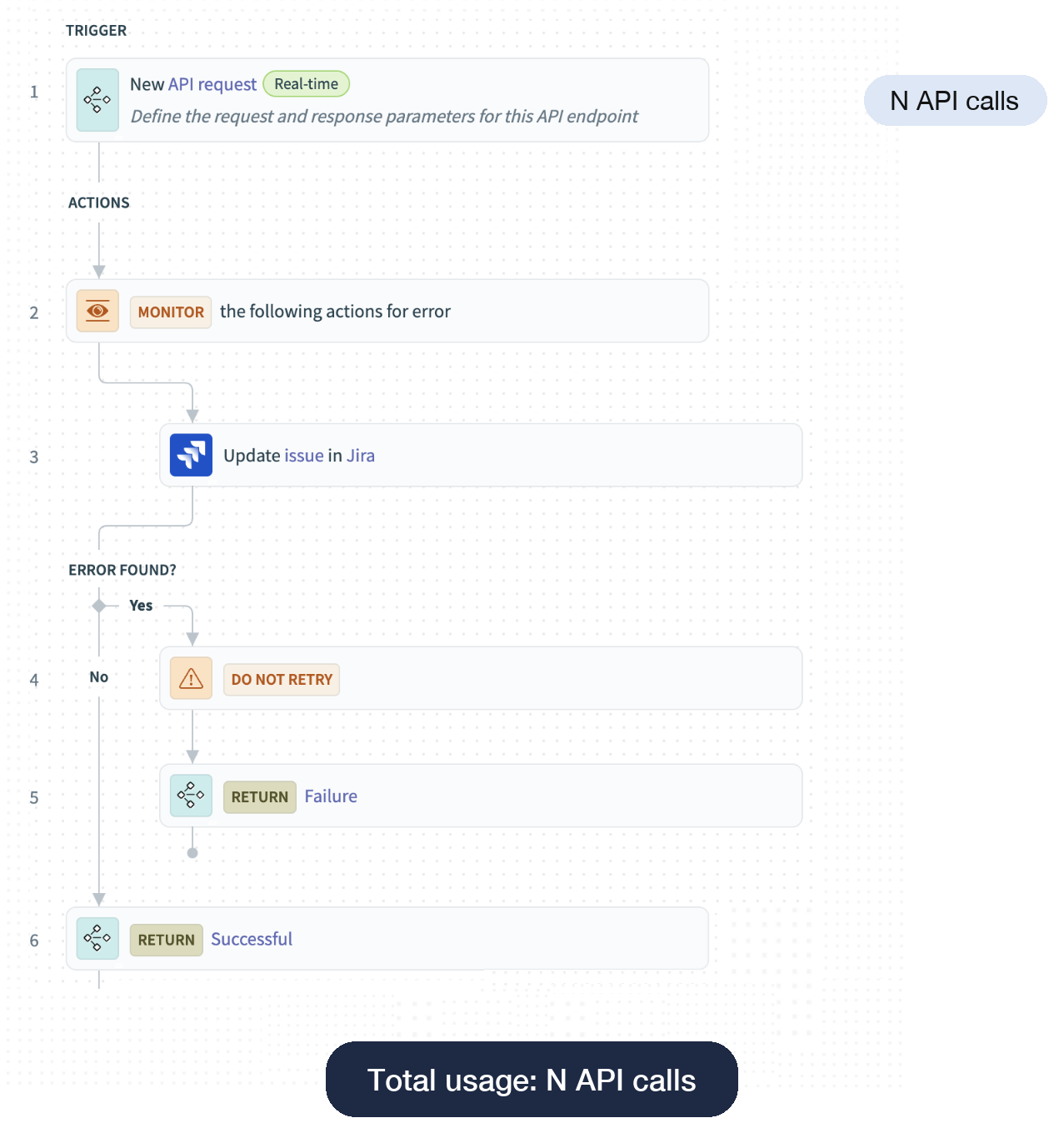 Managed API recipe
Recipe function called synchronously from an API recipe
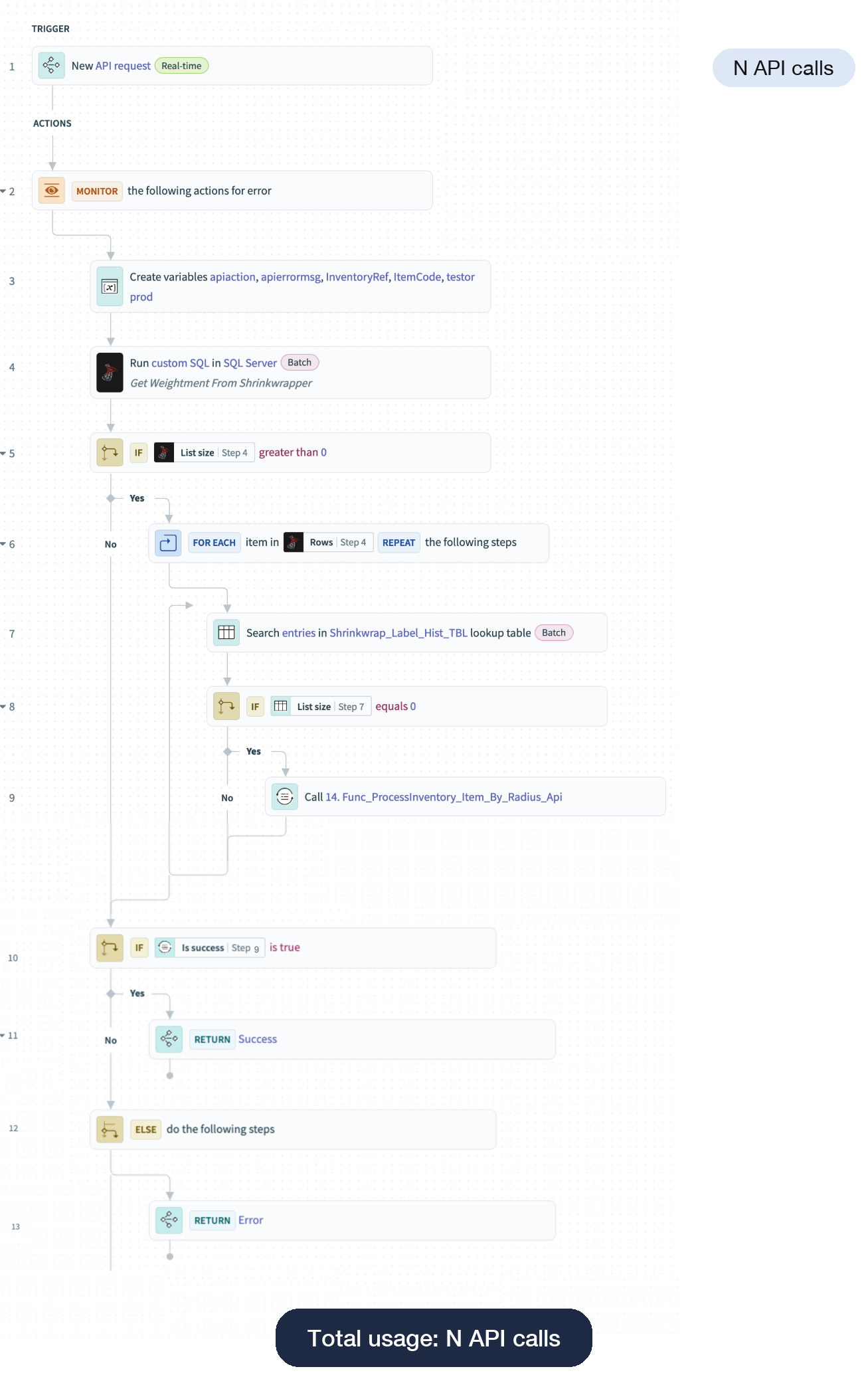 API recipe calls a recipe function synchronously
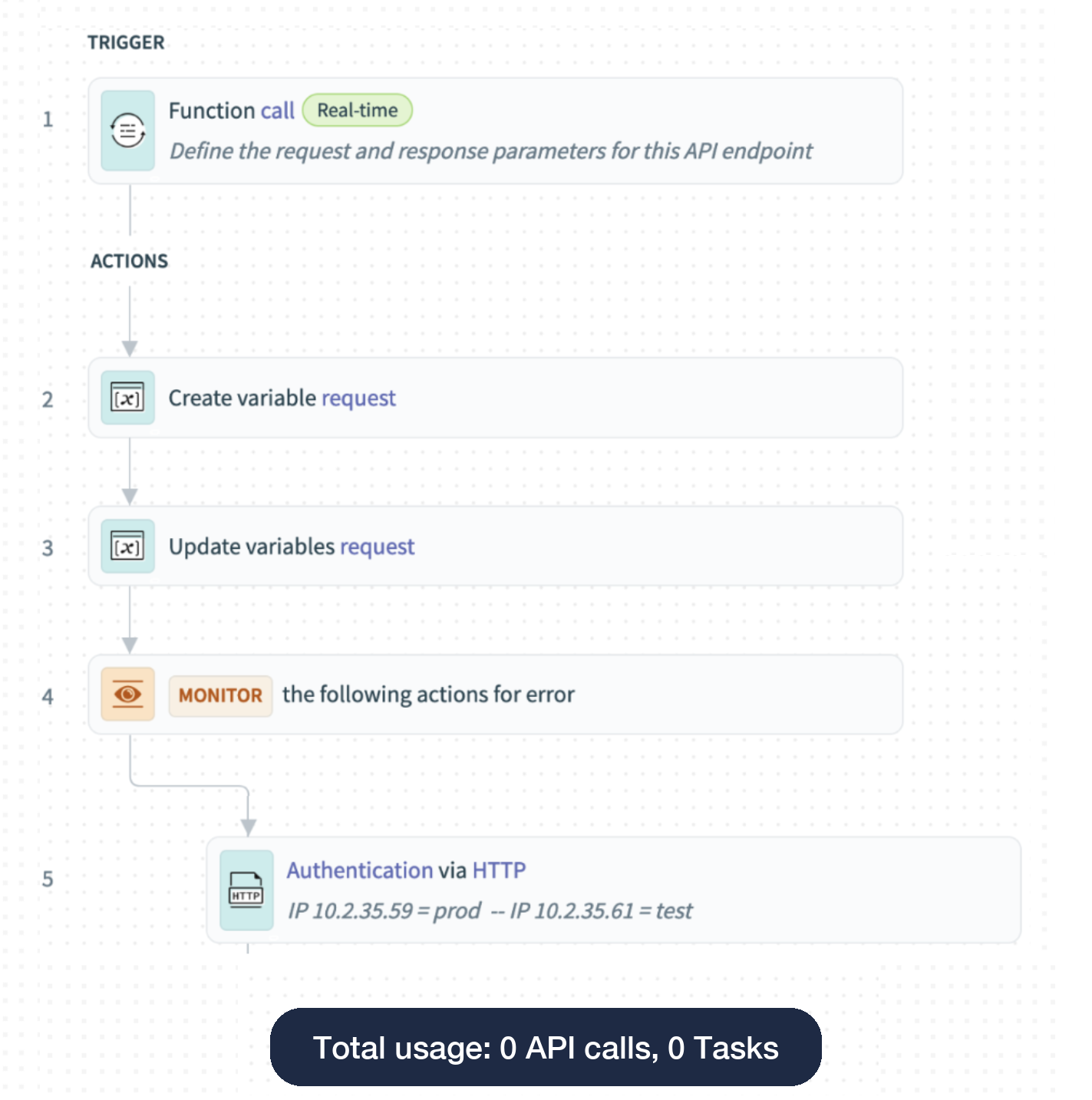 Recipe function called synchronously
Recipe function called asynchronously from an API recipe
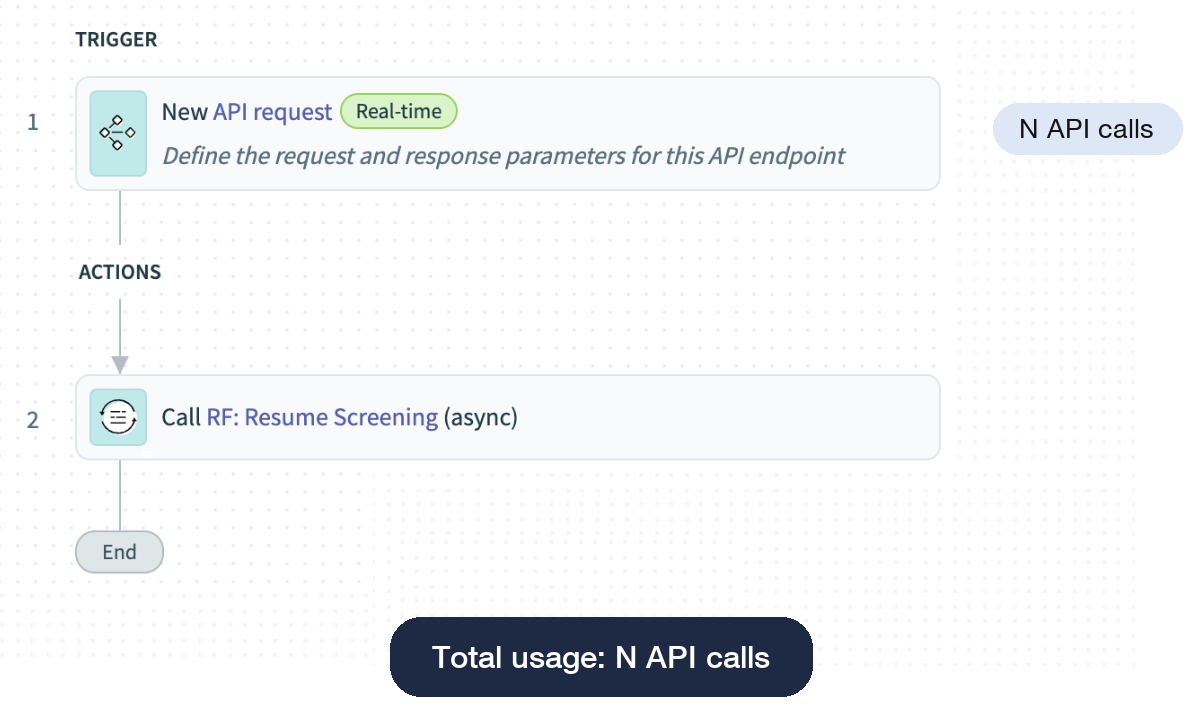 API recipe calls a recipe function asynchronously
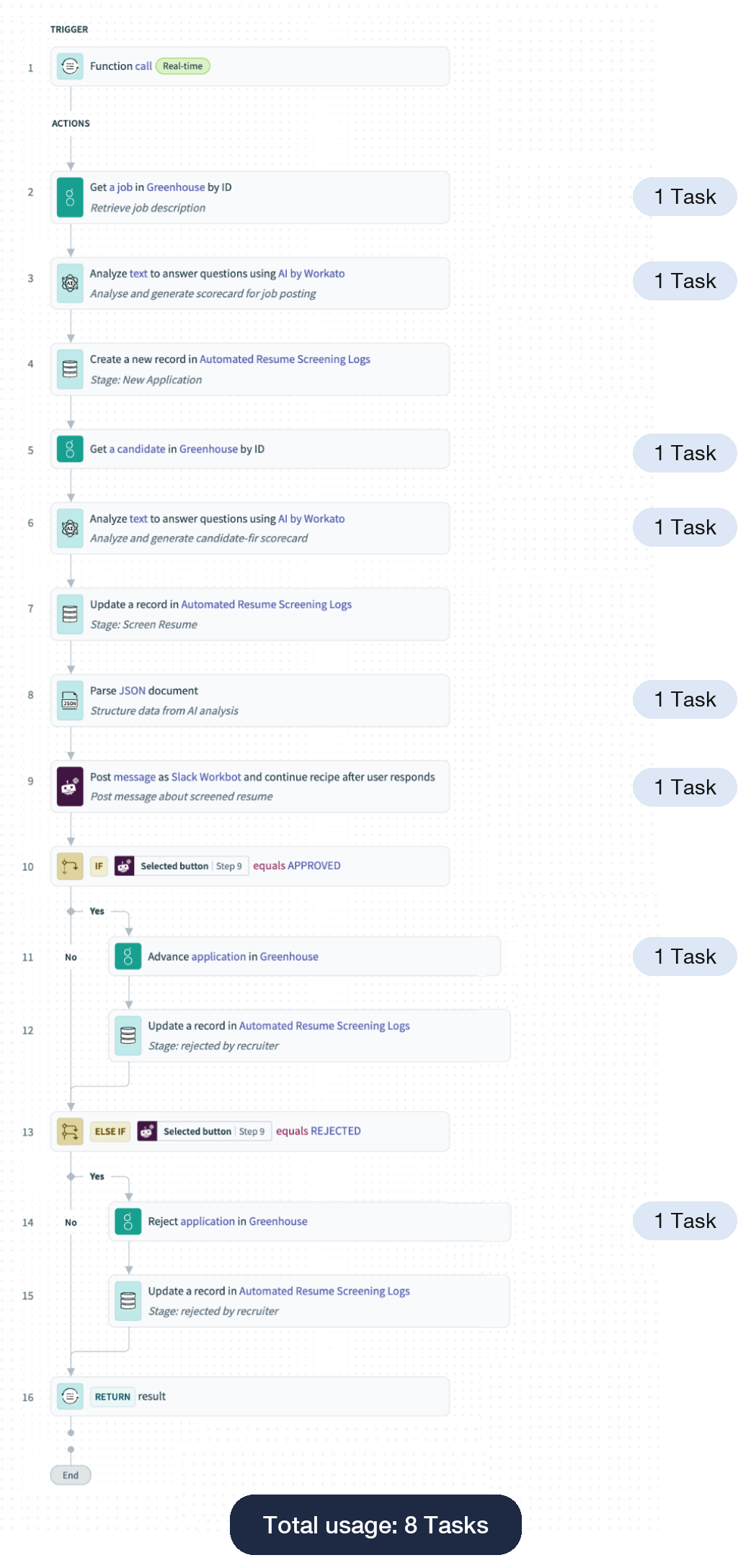 Recipe function called asynchronously
Last updated: